
What Influence Does Communication Have on Politics?
Article Sidebar
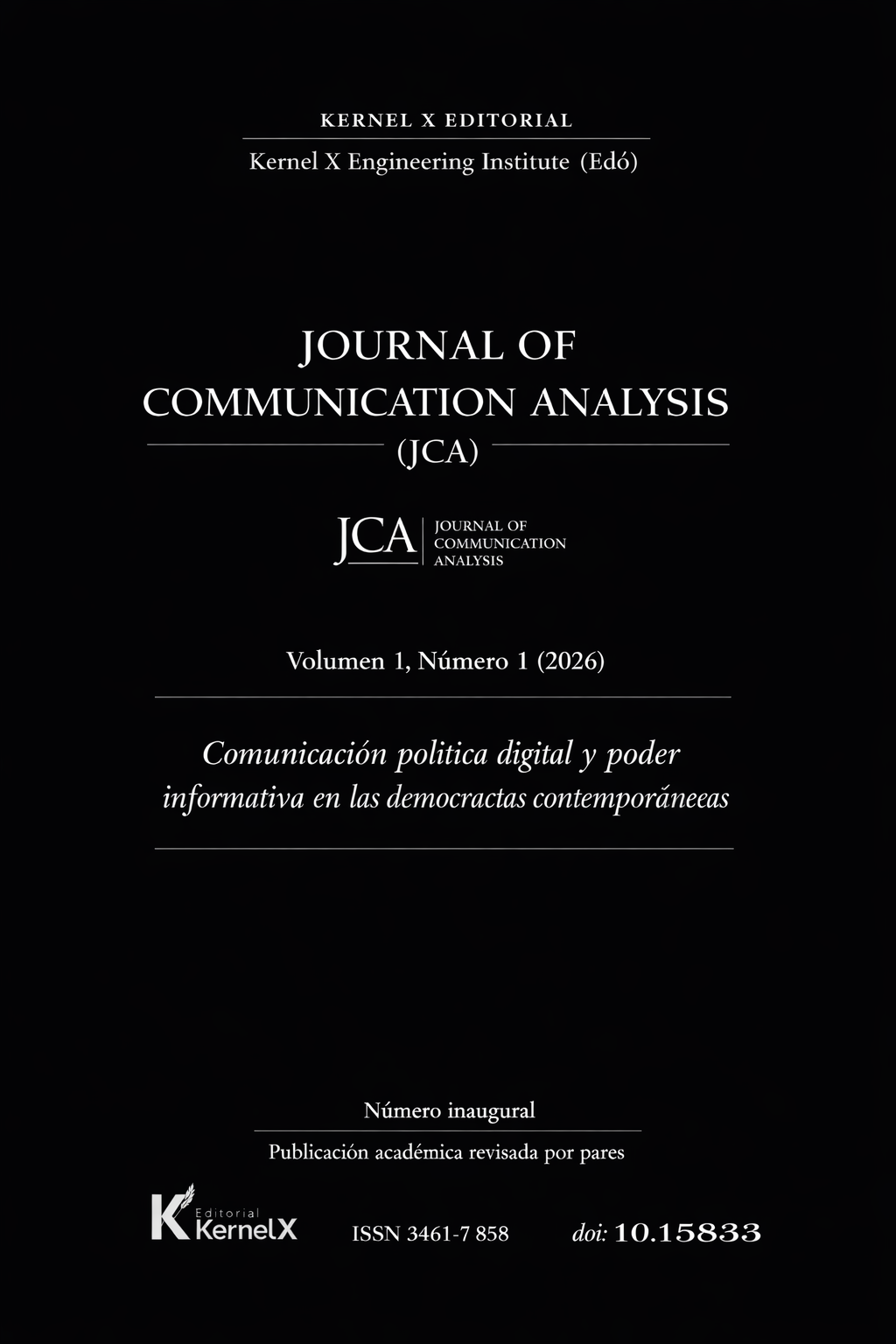
Main Article Content
Abstract
Political communication represents one of the most decisive dynamics in the configuration of power in contemporary democracies. This article analyzes the multidimensional influence of communication on politics from a theoretical-analytical perspective, examining how media, digital platforms, and persuasive discourse shape political behavior, public opinion, and democratic legitimacy. Drawing on agenda-setting theory (McCombs & Shaw, 1972), framing theory (Entman, 1993), and deliberative democracy (Habermas, 1991), the study identifies four critical dimensions of influence: agenda construction, political image management, citizen mobilization, and narrative control. Evidence reveals that in the digital age, the speed, reach, and personalization of political communication have intensified both its democratizing potential and its risks for democratic manipulation.
Downloads
Article Details
Section

This work is licensed under a Creative Commons Attribution 4.0 International License.