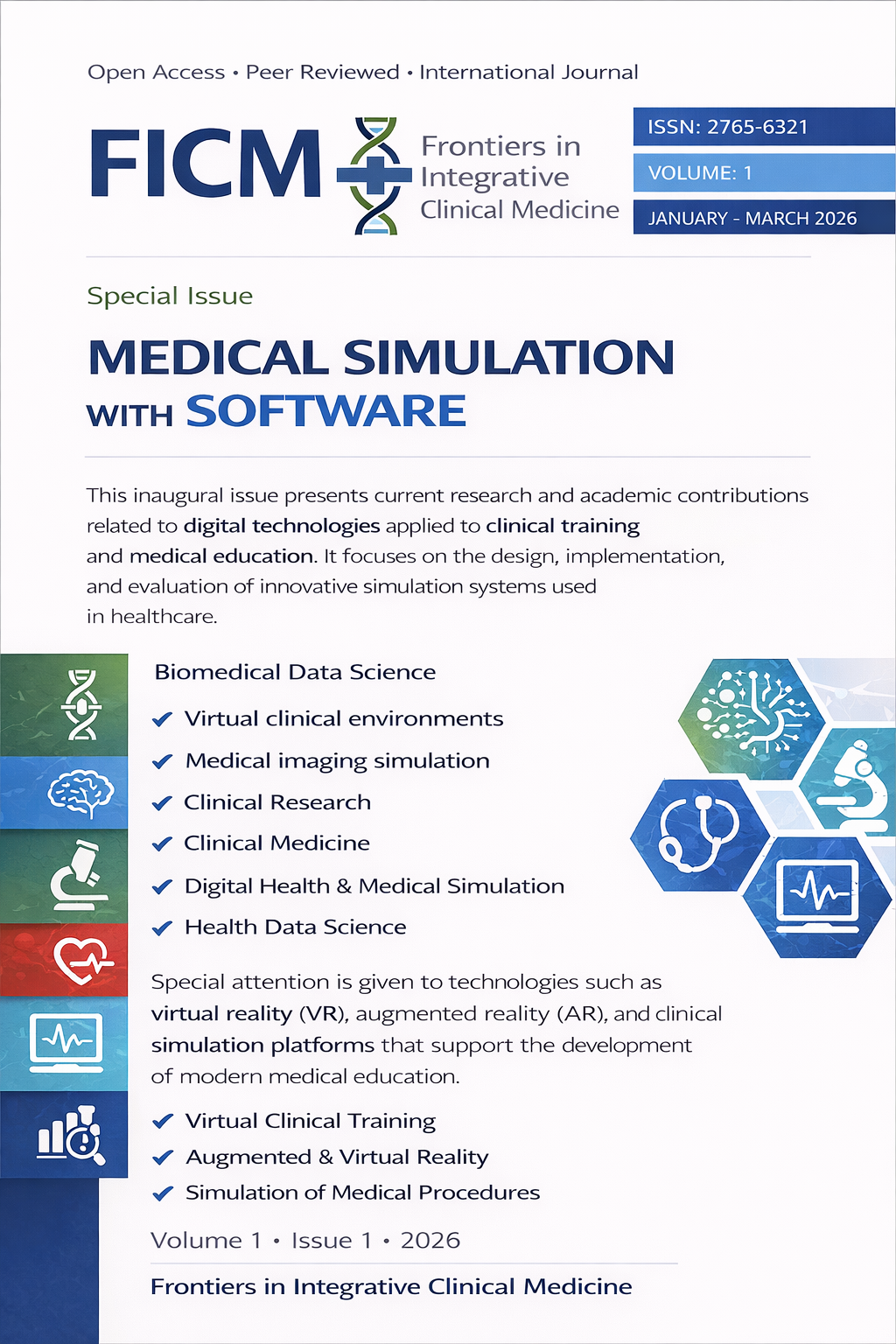
Vol. 1 No. 1 (2026): Medical simulation with software
This issue focuses on the growing role of digital technologies and software-based environments in medical education and clinical training. Medical simulation supported by software platforms has become an essential tool for improving the acquisition of clinical skills, diagnostic reasoning, and decision-making in healthcare professionals.
Advances in computational systems, artificial intelligence, virtual patients, and immersive simulation environments allow the recreation of complex clinical scenarios in safe and controlled settings. These technologies enable students and professionals to practice procedures, develop critical thinking, and enhance patient safety without exposing real patients to risk.
The articles included in this issue explore recent developments in medical simulation software, including virtual learning environments, artificial intelligence-driven simulations, and digital platforms used in healthcare education. Contributions also examine the pedagogical impact of these technologies and their role in improving competency-based medical training.